Latest News
Professor Henry Power appointed Lord White Fellow in English at St Peter’s College
7 September 2026
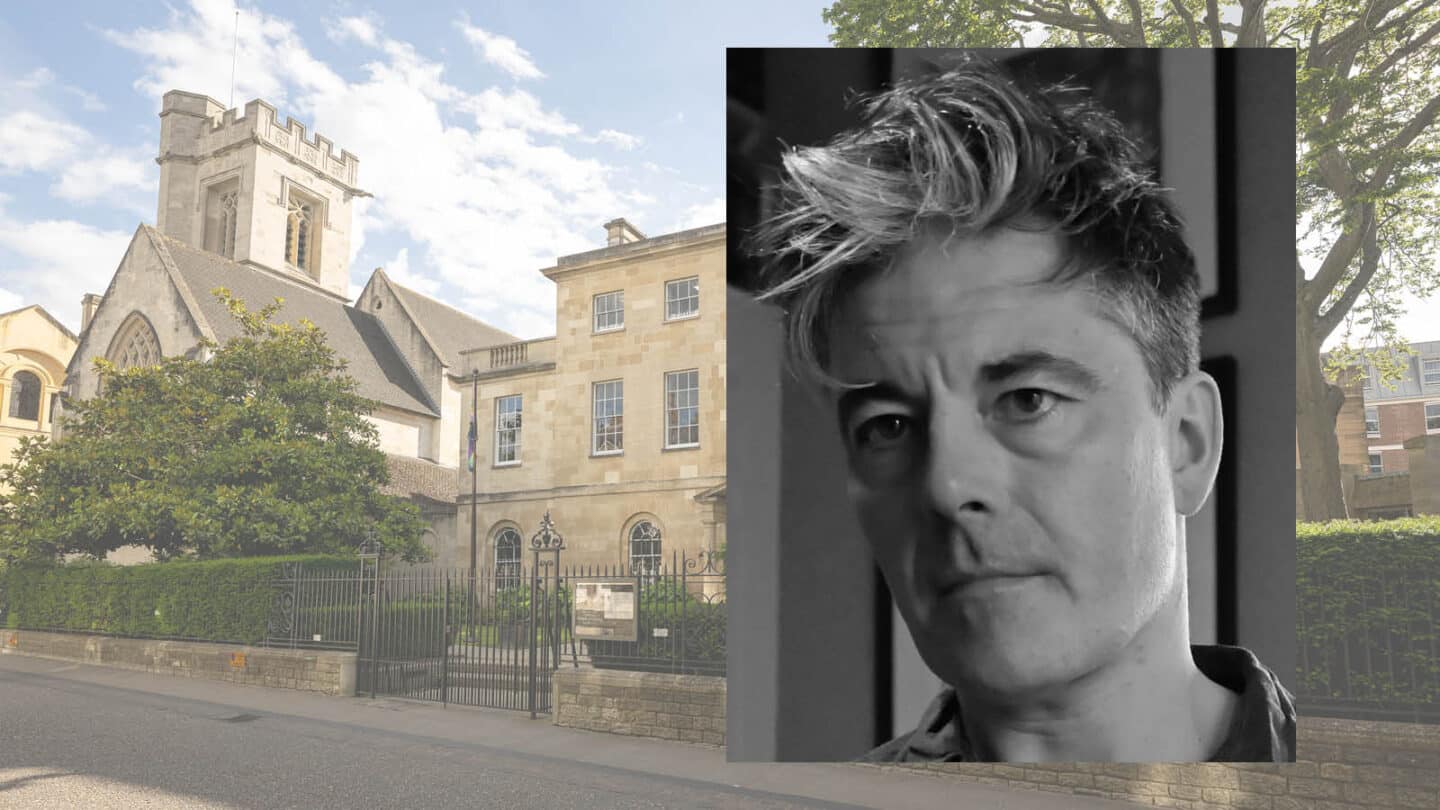
St Peter’s College is pleased to announce the appointment of Professor Henry Power as the Lord White Fellow in English at St Peter’s College and Professor of English Literature at the University of Oxford.
Prof Power studied as an undergraduate at Oxford, initially studying Classics before realising that what really excited him about Greek and Latin literature was the way it had been received and reimagined by later writers. He changed to Classics and English after a year, and his work has focussed on the relationship between ancient and modern literature ever since. His PhD at the University of Cambridge was on the classical sources of Henry Fielding’s great novel, Tom Jones.
Before joining Oxford, Prof Power worked at the University of Exeter for several years, before which he was briefly at the University of Bristol. At St Peter’s, Prof Power joins Prof Marina Mackay in managing the English course at St Peter’s College. He will teach papers covering the period 1550-1830. He enjoys introducing students to a mixture of canonical and non-canonical texts and tries to make sure he is teaching something that is new to him every term.
Prof Power studies what he terms ‘the afterlives of ancient texts and ideas’—that is, the way they have been interpreted and reimagined by (mostly) English-speaking writers. His primary research focus is on the literature of the long eighteenth century, and he is especially interested in authors who are immersed both in classical literature and in the world of satire and print culture. He is an expert on such authors as Alexander Pope, Jonathan Swift, Mary Wortley Montagu, Joseph Addison, and Henry Fielding. His research has been supported by a Leverhulme Trust Research Fellowship (2024-25) as well as grants from the British Academy and the Arts and Humanities Research Council (AHRC).
His most recent book, Homer-Haunted, which was supported by a Leverhulme Trust Research Fellowship, is about the way English poetry has been shaped by engagement with the Homeric poems over the past 400 years. Beginning with George Chapman, the first English translator of the Iliad and the Odyssey, the book concludes with contemporary poets, including Alice Oswald, Sasha Dugdale and A.E. Stallings. He is also editing Pope’s translation of the Iliad for the new Oxford Edition of the Writings of Alexander Pope.
In his free time, Prof Power has been learning the piano since last year and enjoys playing whenever he can.