Latest News
New study from Prof Kirrander on imaging electron rearrangements in highly excited molecules
30 June 2026
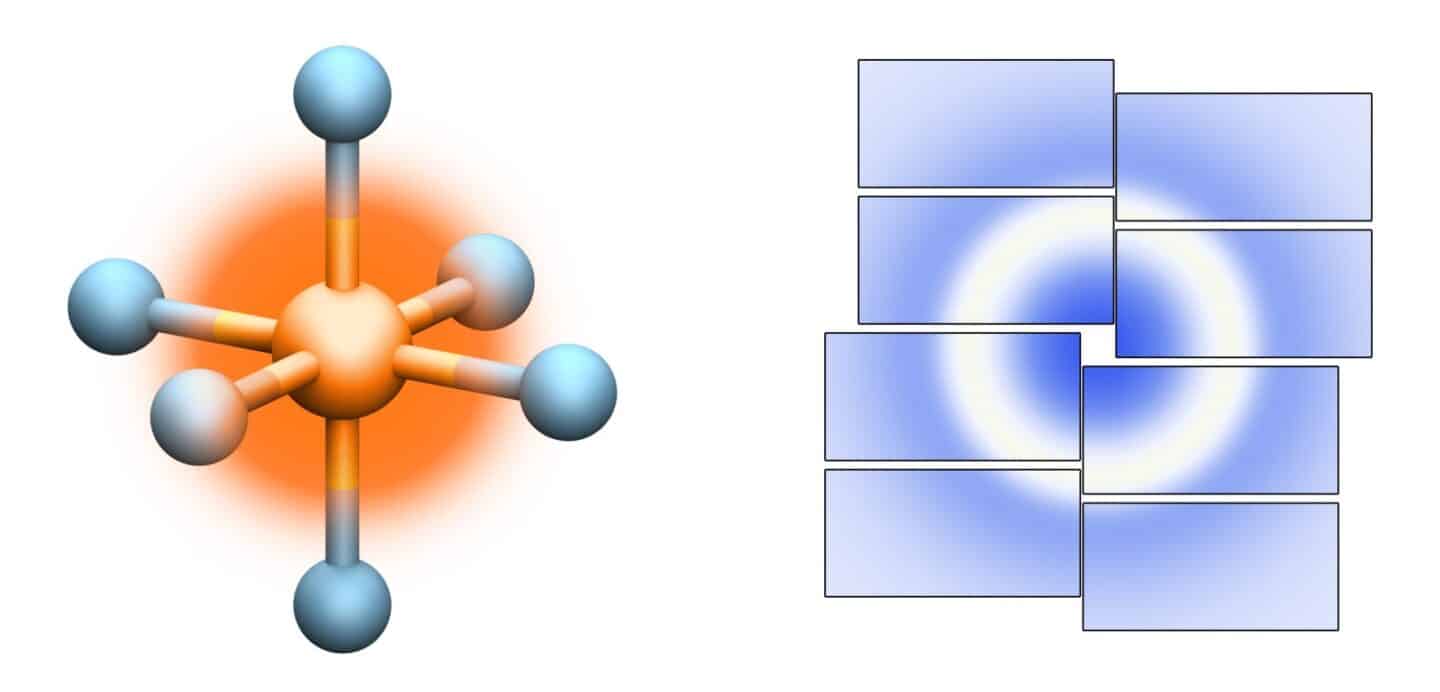
Prof Adam Kirrander (Tutorial Fellow in Chemistry) is part of a team of researchers who have used ultrafast X-ray pulses to capture how electrons rearrange in highly excited molecules, offering a new way to observe the earliest stages of molecular change.
The study, published today in Nature Physics, examined sulfur hexafluoride molecules undergoing Auger–Meitner decay, a process in which an inner-shell electron is removed and the remaining electrons rapidly rearrange before the molecule breaks apart.
By combining advanced X-ray scattering measurements with detailed theoretical modelling, the researchers showed that X-rays can reveal not only a molecule’s structure, but also how pairs of electrons redistribute in real space over extremely short timescales.
The result points towards a new generation of experiments in which increasingly short X-ray pulses could allow scientists to follow electronic motion ‘frame by frame’, shedding light on the earliest stages of chemical change, radiation damage and other ultrafast processes across chemistry, physics and biology.
The research was conducted by a team from the University of Oxford, Brown University, the University of Tübingen and SLAC National Accelerator Laboratory using ultrafast hard X-ray pulses at the Linac Coherent Light Source in California. The work builds on a long-standing collaboration between Professor Peter Weber at Brown University and Professor Adam Kirrander at the University of Oxford, dating back to 2012. Early-career researchers also made major contributions to the study, including co-first authors Mats Simmermacher and Nathan Goff.
Prof Kirrander said:
‘It is exciting to be able to resolve electron dynamics in such detail. This is the result of a great collaboration, with important contributions from the young scientists on the team.’